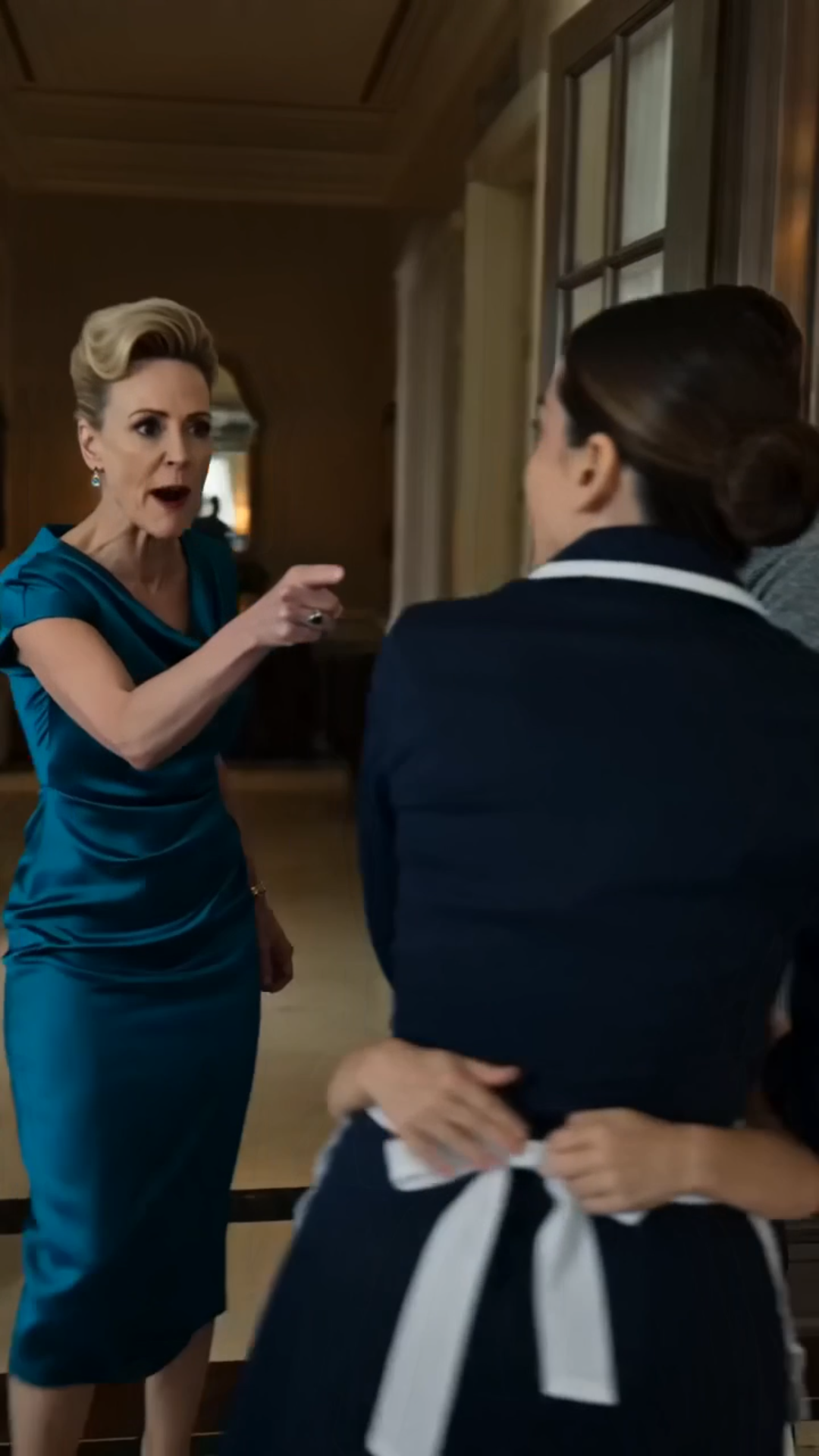
Full part: The triplets walked up to a single father and innocently said, “Hello, sir, OUR MOTHER HAS A TATTOO EXACTLY LIKE YOURS.”

The triplets walked up to a single father and innocently said, “Hello, sir, OUR MOTHER HAS A TATTOO EXACTLY LIKE YOURS.” He froze on the spot, because the broken compass inked on his arm was tied to a night he had spent years trying to forget. Suddenly, a secret he thought was buried forever came rushing back.
“My mom has a tattoo exactly like yours.”
The words hit me so hard that for a moment I forgot how to breathe. I was sitting on an old bench in Central Park, nursing a cup of cheap coffee after a long morning at work, when three identical little girls suddenly stopped in front of me and stared at the faded compass tattoo on my arm.
They looked no older than seven. Dressed in matching beige coats with perfect hair bows and polished shoes, they seemed completely out of place among the noisy playground crowds. Yet what caught my attention wasn’t their appearance. It was the way they looked at me, calm, observant, and strangely certain.
“What did you say?” I asked.
The girl standing in the middle pointed directly at my forearm. “That compass. My mom has the same one. Hers is on her shoulder.”
My stomach tightened instantly.
The tattoo wasn’t something anyone would recognize by accident. Eight years earlier, I had sketched that broken compass on a napkin during a wild night in Seattle. A woman named Camila had laughed at the design and insisted we both get matching versions before sunrise. We called it a broken compass because neither of us knew where our lives were heading.
Since then, I had never seen another tattoo like it.
“What’s your mother’s name?” I asked carefully.
Before any of the girls could answer, a woman in a gray nanny uniform hurried toward us. The panic on her face appeared long before she reached the bench.
“Regina, Lucy, Valerie!” she snapped. “What are you doing?”
She immediately pulled the girls closer and offered me a nervous apology. The reaction felt far too intense for a simple conversation in a public park.
“I’m sorry, sir. They shouldn’t have bothered you.”
I stood up, confused and increasingly uneasy.
“They weren’t bothering me. I just wanted to ask—”
The nanny cut me off before I could finish.
“Ms. Montgomery is going to be furious.”
The name stopped me cold. Montgomery. I knew that name. Everyone in New York knew that name.
As the nanny rushed the girls toward a black armored SUV waiting at the curb, memories I had spent years burying suddenly came rushing back. The woman from Seattle had never told me much about herself, but there had been hints. Expensive clothes disguised as casual wear. Phone calls she refused to answer. The careful way she avoided questions about her family.
And now three little girls carrying her face had just told me their mother shared the exact tattoo I had drawn.
The SUV doors closed before I could reach them.
For a brief second, one of the girls looked back through the tinted glass and pressed her hand against the window. Then the vehicle pulled away and disappeared into traffic.
I remained standing on the sidewalk long after it was gone. Because if Camila Montgomery was really their mother, then one question refused to leave my mind.
Why did three seven-year-old girls have a tattoo story connected to a night their mother and I shared exactly eight years ago? …

Thank you so much for reading this part of the story
This is only the beginning. The next part and the full ending have already been posted in the COMMENT BELOW
If you don’t see them right away, tap “SEE ALL COMMENTS” to continue reading the REST
He Found His Pregnant Wife Eating Scraps Under His Mother’s Table.
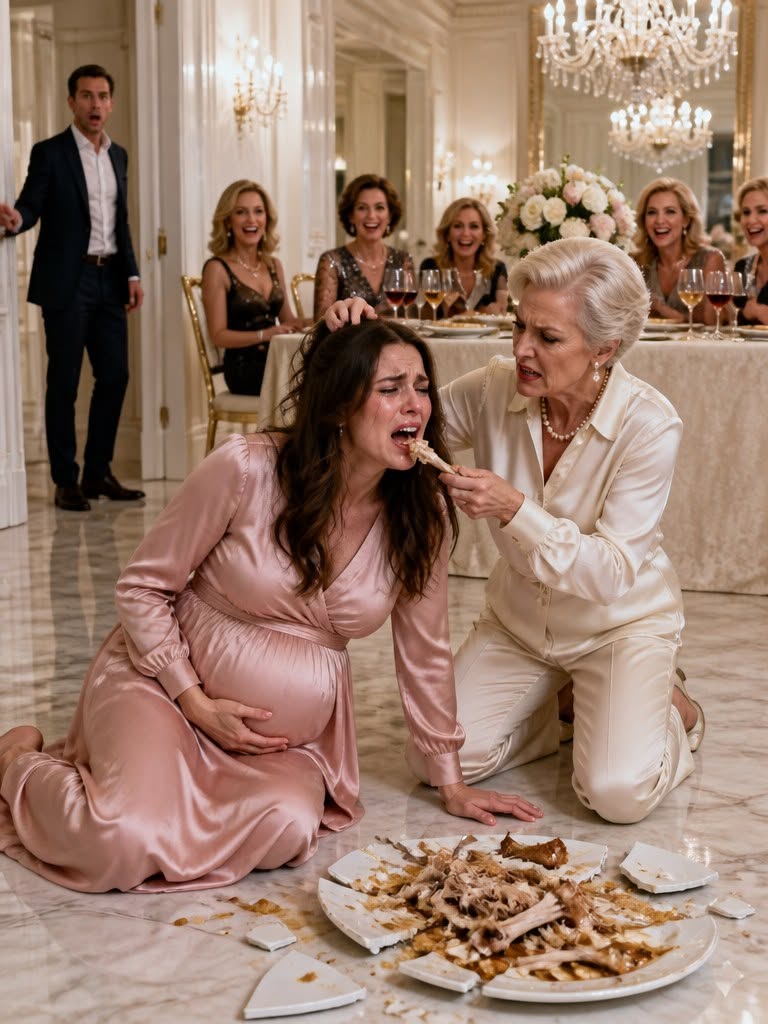
A half-eaten rib landed beside my hand.
Grease splashed across the marble, close enough to stain the hem of my maternity dress.
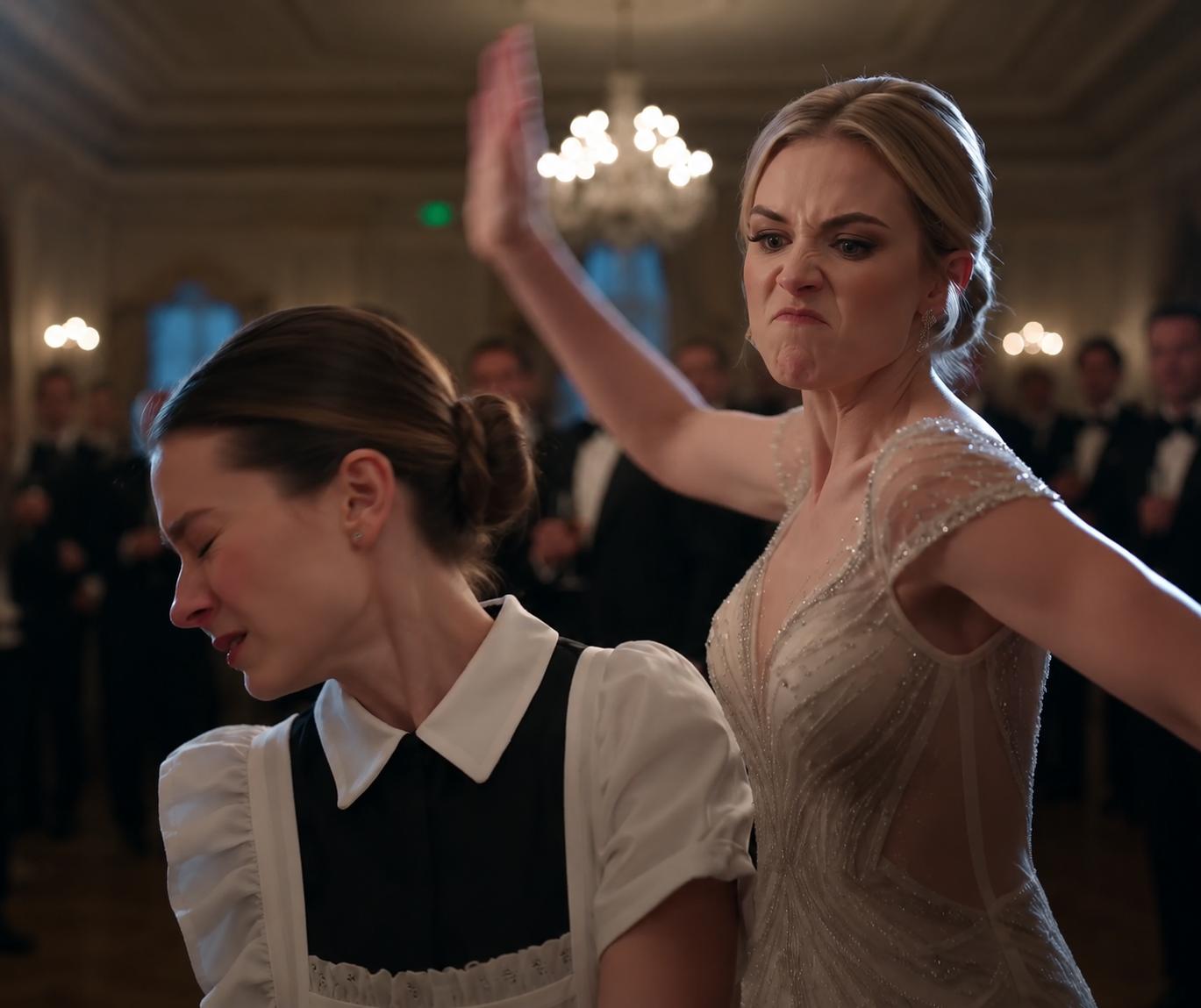
“Under the table is where women who live off a man belong,” Eleanor announced.
Six women laughed above me.
Their heels surrounded the cheap plastic plate she had placed on the floor. Shrimp tails, torn bread crusts, pieces of fat, and bones stripped almost clean lay in a shallow pool of sauce.
My knees had stopped hurting an hour earlier.
That frightened me more than the pain.
I pressed one hand beneath my belly and reached for a shred of meat with the other. The baby shifted weakly inside me.
“Eat faster,” one of Eleanor’s friends said. “The bathrooms still need attention.”
Another woman lifted her wineglass.
“Once the grandson arrives, Sebastian can finally replace her.”
Eleanor took a slow sip.
“She was only useful for lending us her womb. My son deserves a woman of his own status.”
The front door opened.
No one heard it over the music.
I saw polished black shoes appear at the edge of the dining room.
Sebastian stopped.
He had returned for a contract folder. His executive board was waiting downtown. He should have remained gone until evening.
For one terrible second, I wished he had.
Then a guest dropped another bone.
Sebastian crossed the room and pulled back the tablecloth.
His face disappeared of all color.
I knelt beneath him in a stained dress, my hair damp against my neck, my plate of scraps between us.
“Clara?”
I tried to stand too quickly.
Pain tightened around my abdomen.
“Sebastian… I wanted to sit down here.”
The lie came automatically.
I had spent weeks protecting him from a truth I believed he already knew.
He reached for me, then stopped when I flinched.
“Did someone hurt you?”
“No.”
Eleanor’s chair scraped backward.
“She is dramatic because she refuses to eat properly.”
Sebastian lowered himself beside me.
He saw the dark bruises on my knees.
The red marks around my wrists.
The hollow space beneath my cheekbones.
He slipped one arm behind my back and helped me rise.
My legs nearly folded.
He removed his suit jacket and wrapped it around my shoulders.
Then he turned toward the table.
Lobster tails, prime beef, imported wine, luxury shopping bags, and fresh flowers covered a surface long enough to seat twenty people.
Eleanor had told him she was buying prenatal vitamins and nourishing meals with the uncapped card he gave her.
Sebastian gripped the tablecloth.
I knew what he intended a second before he pulled.
Silver platters, crystal glasses, wine bottles, and porcelain crashed across the marble. Women screamed and jumped from their chairs.
Eleanor stared at the wreckage.
“Are you insane? I am your mother!”
“And she is my wife.”
His voice was quiet enough to silence the room.
“The child she is carrying is mine. Neither fact mattered to you.”
He called private security and ordered every guest escorted from the property. No one was allowed to remove a phone, bag, or document until security recorded ownership.
Then he carried me to the car.
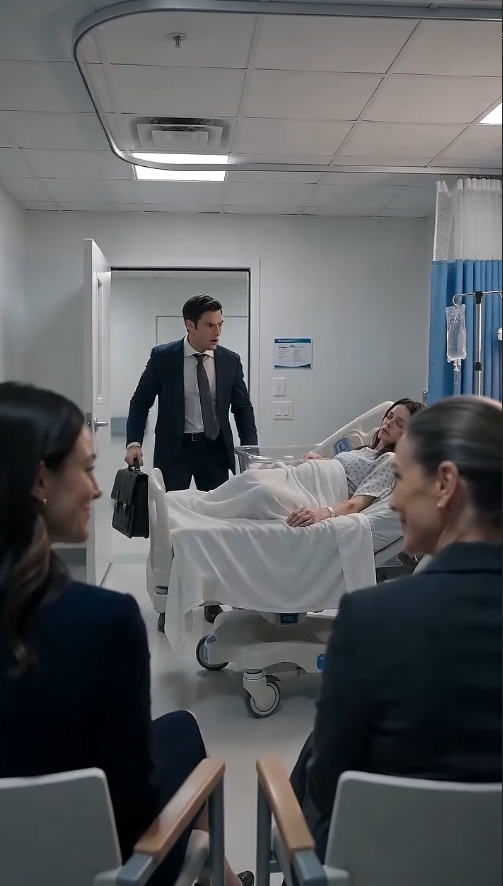
At the hospital, monitors tightened around my abdomen. Nurses drew blood and placed an IV while our daughter’s heartbeat rose and fell in patterns that changed the doctor’s expression.
Dr. Lena Ortiz emerged two hours later.
“Your wife has severe anemia, malnutrition, dehydration, and signs of prolonged physical exhaustion. The baby is experiencing fetal distress.”
Sebastian looked through the glass toward me.
“If you had waited another day,” she said, “we might have been discussing two deaths.”
He sat beside my bed and opened the home-security application.
The dining-room cameras had been remotely disabled.
A secondary archive remained.
Nineteen folders appeared.
MATERNAL COMPLIANCE — DAY ONE.
DAY TWO.
DAY THREE.
The final folder had already been created.
Its title was:
LIVE BIRTH COMPLETION.