Part 3
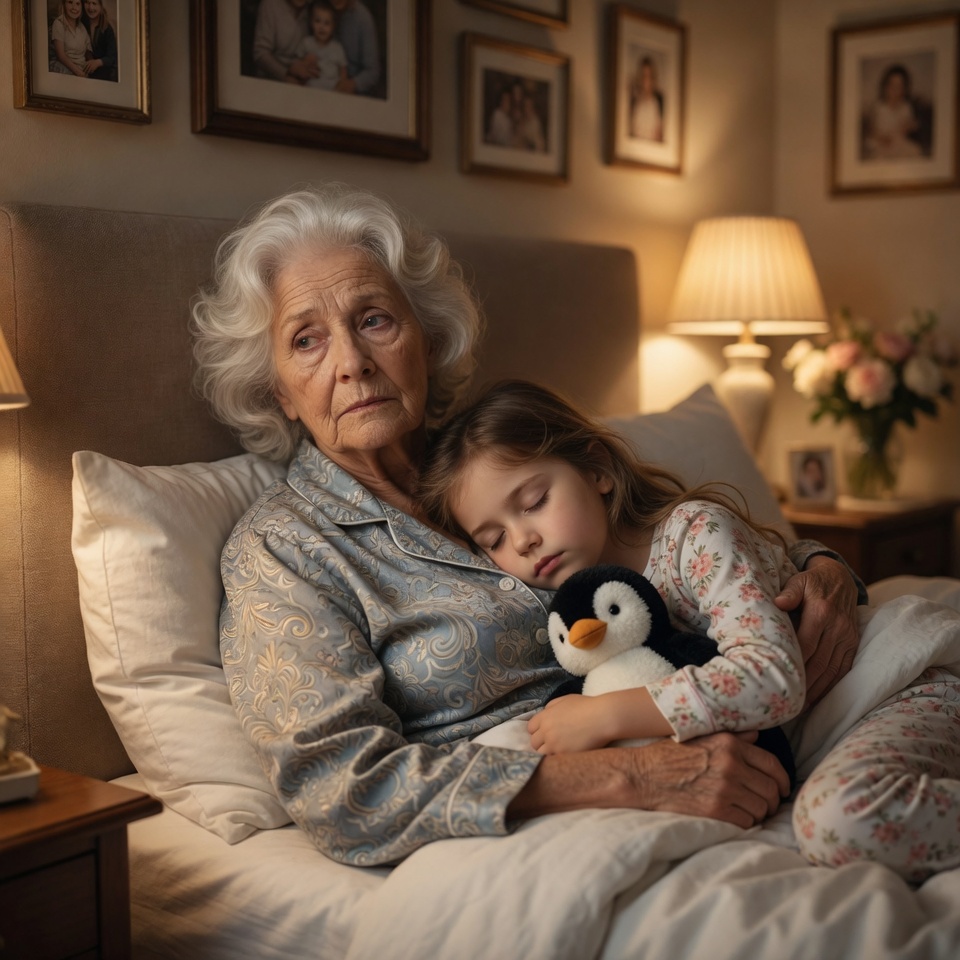
I confirmed. “You and Philip need to live within your actual means, not the inflated lifestyle you have maintained through my subsidies.”
“We will have to make significant changes,” she admitted. “The mortgage, Alice’s school tuition, the club memberships.”
“Yes, you will,” I agreed. “But perhaps those changes might lead to more meaningful priorities. More time with Alice instead of working constantly to maintain appearances. More authentic relationships not based on wealth or status.”
Rebecca looked skeptical, but nodded again. “We will try. It will not be easy, but we will try.”
After she left, I remained in my study, turning our conversation over in my mind. Was her contrition genuine or simply another strategy to protect her interests?
Only time would tell. For now, I had to proceed with cautious optimism for Alice’s sake.
The following morning, Rebecca and Philip announced they were returning to their own home. “We have imposed on you long enough,” Rebecca explained as they packed their bags. “And we have adjustments to make, financial planning to do.”
I nodded, understanding the subtext. They needed to regroup, reassess their budget without my financial support, and determine how to maintain some semblance of their lifestyle with just their own incomes.
Alice was disappointed. “Cannot we stay longer? Grandma and I were going to start reading the new mystery series.”
“You will still see Grandma regularly,” Rebecca assured her with a meaningful glance in my direction. “In fact, more regularly than before. We are working out a schedule, like for your piano lessons.”
Philip added, “Regular on the calendar every week.”
Alice brightened. “Really? Not just when you remember or are not busy?”
The innocent question landed like a slap, highlighting how often they had canceled her time with me for their own convenience. Rebecca flushed while Philip suddenly became very interested in his suitcase zipper.
“Really,” Rebecca confirmed. “Grandma is going to be a bigger part of our routine from now on.”
As they loaded their car, I pulled Rebecca aside for one final word. “The spring break trip with Alice. I meant what I said. I would like to take her to see the mountains.”
“Where exactly?” she asked, weariness creeping back into her tone.
“Colorado. The Rockies. I have already looked into appropriate accommodations and activities for her age.”
Rebecca hesitated, old control patterns visibly wrestling with new realities. “I suppose that would be all right, as long as we have details, emergency contacts, that sort of thing.”
“Of course,” I agreed easily. “I will send you a complete itinerary once it is finalized.”
What I did not mention was that the trip represented more than just a grandmother-granddaughter vacation. It was a test of their willingness to honor our new arrangement, of their respect for my relationship with Alice, of their acceptance that control had shifted.
After they drove away, the house felt suddenly empty and quiet. For a moment, I missed Alice’s energetic presence acutely.
But there was also relief, space to breathe, to process, to plan my next steps without performing normalcy for my granddaughter’s sake. I made myself a cup of tea and carried it to the garden, sitting on the bench my husband had built decades ago.
The roses needed more attention, I noted absently. Just like relationships, they required regular care, occasional pruning, and sometimes, when disease threatened the entire plant, more dramatic intervention.
The metaphor brought a small smile to my face. I had performed some rather significant pruning on my family tree this week.
Now it remained to be seen what new growth might emerge from the cuts. My phone buzzed with a text from Luka.
“How did it go?”
“They have agreed to the terms,” I replied. “For now, at least.”
“Stay vigilant,” came his immediate response. “People like that rarely change overnight.”
He was right. Of course, this wasn’t truly resolved, just shifted to a new phase.
But for the first time in years, I felt in control of my own life, my own decisions, my own future. That alone was worth everything.
Two weeks passed, bringing cautious adjustment to our new family dynamic. True to their word, or perhaps mindful of the consequences of breaking it, Rebecca and Philip established a regular schedule for Alice to spend time with me.
Wednesday afternoons after school and every other weekend, Alice would arrive with her backpack and bright smile, eager for our time together. The financial separation proved more challenging for them.
Their first mortgage payment without my assistance prompted a tense phone call from Rebecca. “Mom, I know we agreed to the terms, but could you possibly just this once help with the payment? The property taxes came due at the same time, and we are a bit stretched.”
“No, Rebecca,” I said gently but firmly. “Your finances are your responsibility now. You might need to consider downsizing if the house is beyond your means.”
“Downsizing?” Her horror at the suggestion was palpable, even through the phone. “But this neighborhood, Alice’s school district…”
“There are excellent public schools,” I pointed out, “and smaller homes in good neighborhoods. These are the kinds of decisions most families make based on their actual incomes.”
After a moment of stunned silence, she had mumbled something about looking into options and ended the call. Later that week, I noticed a for-sale sign had appeared in front of their house.
Meanwhile, I focused on rebuilding my own life, not just around Alice, but for myself. I joined a book club at the local library, reconnected with old friends I had neglected during my husband’s illness, and even began taking a watercolor class on Tuesday mornings.
Small steps toward the woman I might have been all along had I not subsumed myself in caretaking roles. Luka checked in regularly, ensuring the legal protections we had put in place remained solid.
The recordings and documents stayed securely in my safety deposit box, insurance against any backsliding on Rebecca and Philip’s part. “Have you considered returning the items you removed from the house?” he asked during one of our conversations.
“Now that the immediate threat has passed.”
“Not yet,” I replied. “I am still watching and waiting. Trust takes longer to rebuild than it does to break.”
He nodded approvingly. “Wise approach. Keep the leverage until you are absolutely certain.”
On a sunny Saturday in mid-March, I was teaching Alice how to make my husband’s famous blueberry pancakes when my phone rang with Rebecca’s ringtone.
“Good morning,” I answered, tucking the phone between my ear and shoulder as I helped Alice flip a perfectly golden pancake.
“Mom, we need to talk.” Rebecca’s voice held an unfamiliar note. Not the practiced charm she usually employed when asking for something, nor the tight control when things were not going her way. She sounded defeated.
“Is everything all right?” I asked, instantly alert.
“Not really. The house sale fell through. The buyers could not secure financing.” She paused. “And we have… well, we have been downsizing in other ways. Philip’s car went back to the dealership yesterday. We canceled the country club membership.”
“I see,” I said neutrally, moving away from Alice, who was happily decorating her pancakes with blueberry faces. “These are difficult adjustments, but necessary ones.”
“I know that now.” Another pause. “The thing is, we found a smaller house we can actually afford. It is in a different school district, but like you said, the public schools are good. The problem is the down payment. We have liquidated what we can, but we are still short.”
I tensed, waiting for the inevitable request for money that would test our new boundaries. “I was wondering,” she continued, “if you might consider letting us sell some of the family silver, the pieces that would have come to me eventually anyway. It would make the difference for the down payment, and it seems better than taking on more debt.”
The request took me by surprise, not for money directly, but for permission to sell items she considered her inheritance, items currently secured in my safety deposit box. “That is an interesting proposal,” I said carefully. “Let me think about it and get back to you.”
After ending the call, I returned to the kitchen where Alice was proudly displaying her blueberry pancake art. “Look, Grandma, this one has a smile just like yours.”
“It is beautiful, sweetheart,” I praised her, pushing aside thoughts of Rebecca’s request to focus on the moment.
Later, while Alice was absorbed in a movie, I called Luka for advice
“It is a test,” he said immediately. “They are seeing if you will bend on the financial aspects of your agreement.”
“Perhaps,” I acknowledged. “But it is also the first time Rebecca has proposed a solution that does not involve me simply writing a check. There is a recognition there that these items have value, that choices have consequences.”
“What are you thinking of doing?” he asked.
“I am not sure yet,” I admitted. “Part of me wants to maintain the hard line we established. Another part sees this as potentially a step toward Rebecca taking responsibility.”
After further discussion, I arrived at a decision that felt right, firm but not punitive, maintaining boundaries while acknowledging effort. When I picked Alice up for our Wednesday afternoon the following week, I asked Rebecca if we could speak privately for a few minutes.
“I have considered your request about the silver,” I began once Alice was occupied with her tablet in the next room.
Rebecca nodded, tension visible in the set of her shoulders.
“And I won’t release the silver for you to sell,” I said, watching her face fall. “But I have an alternative proposal.”
I outlined my solution. I would provide a one-time contribution to their down payment, not as a gift, but as an advance against any future inheritance Rebecca might receive.
The amount would be documented with interest, to be deducted from whatever portion of my estate might eventually go to her. Additionally, any such arrangement would be contingent on continued adherence to our agreement regarding Alice and appropriate boundaries.
“You are lending us the money,” she clarified, confusion evident in her expression.
“No,” I corrected gently. “I am advancing you a portion of what might someday be yours, with the understanding that it reduces that future amount. There is no repayment schedule, no debt, just a documented reduction in any potential inheritance.”
Rebecca was quiet for a long moment, processing this unexpected approach. “That is fair,” she finally said. “More than fair, actually.”
“I think so too,” I agreed. “It acknowledges that you are making genuine efforts to adjust your lifestyle while maintaining the principle that my assets remain under my control.”
“And if we slip back into old patterns?” she asked, surprising me with her perceptiveness.
“Then any future considerations would be off the table,” I said simply. “This is a one-time accommodation in recognition of your efforts so far.”
As we finalized the details, I observed a subtle shift in Rebecca’s demeanor, a new respect in her eyes, perhaps even a grudging admiration for how I had navigated this challenge. For the first time since this ordeal began, I felt we might eventually establish a healthier relationship, not just for Alice’s sake, but for our own.
Later that afternoon, as Alice and I walked through the park collecting interesting leaves for her science project, she looked up at me with those perceptive eyes. “Mom and Dad seem different lately, quieter. And Dad does not talk on his phone during dinner anymore.”
“Sometimes adults have to make changes in their lives,” I explained carefully. “Just like you had to adjust when you moved from kindergarten to first grade.”
She considered this, then nodded. “They argue about money a lot, but not as loud as before.”
“Financial adjustments can be challenging,” I acknowledged, steering the conversation toward lighter topics. “How about we look for some of those red maple leaves for your project?”
As Alice raced ahead, searching for the perfect specimens, I reflected on her observation. Rebecca and Philip were struggling, yes, but perhaps in that struggle they might discover what truly mattered.
That relationships and integrity ultimately brought more satisfaction than possessions or appearances. It was a lesson that had taken me far too long to learn myself.
“Are those real mountains, Grandma?” Alice pressed her face against the airplane window, eyes wide with wonder as the mountain range came into view, majestic peaks still snowcapped in early April.
“Those are real mountains,” I confirmed, enjoying her excitement, “and tomorrow we will be right up there among them.”
Spring break had arrived, and with it our long-anticipated mountain adventure. To my surprise, Rebecca and Philip had honored our agreement without resistance, helping Alice pack and delivering her to the airport with only the normal parental reminders about brushing teeth and wearing sunscreen.
“Daddy seemed sad when we left,” Alice observed, finally turning away from the window. “He kept hugging me extra long.”
“He will miss you,” I said, choosing my words carefully. “Parents always miss their children when they are apart, even when they know they are having wonderful experiences.”
“Do you think he and Mom will be okay in the smaller house?” she asked, the question catching me off guard. “Mom keeps saying it is cozy, but I heard her telling her friend it is half the size of our old one.”
Children absorb so much more than we give them credit for. “They will adjust, sweetheart. Sometimes changes that seem difficult at first turn out to be exactly what we needed.”
Alice nodded solemnly. “Like when I had to switch dance classes and I was really sad, but then I made better friends in the new class.”
“Exactly like that,” I agreed, marveling at her resilience and insight.
Our accommodations in the mountain town were perfect. A comfortable two-bedroom condo with stunning mountain views, walking distance to both the village and the gondola that would take us up the mountain. I had researched extensively to find activities appropriate for Alice’s age and interest level, balancing outdoor adventures with cultural experiences.
Our first full day began with a guided nature hike specifically designed for families. Our guide, a bearded young man named Travis who clearly adored children, taught Alice to identify animal tracks in the lingering patches of spring snow and explained how the trees, for which the town was named, would soon be budding with new growth.
“Those trees are actually all one organism,” he explained, pointing to a grove of slender white trunks. “They are connected underground through their root system. What looks like many separate trees is actually one living thing.”
“Like a family?” Alice asked, her brow furrowed in concentration.
Travis grinned. “That is a beautiful way to think about it. Yes, connected even when they appear separate.”
I caught his eye over Alice’s head, offering a silent thank-you for the perfect metaphor. Despite the fractures in our family, the connections remained complex, sometimes painful, but undeniably present.
The days unfolded in a pleasant rhythm of exploration and rest. We rode horses along mountain trails, visited a working ranch where Alice helped feed baby lambs, attended a children’s workshop at the local art center, and spent one magical evening stargazing with an astronomer who helped us identify constellations in the impossibly clear mountain sky.
Through it all, Alice blossomed with confidence and joy, her natural curiosity finding fertile ground in these new experiences. I took dozens of photos documenting not just the activities, but the small moments between.
Alice’s expression of wonder when a hummingbird hovered near our lunch table. Her tongue stuck out in concentration as she painted a mountain landscape. Her peaceful face as she dozed against my shoulder during a shuttle ride back to our condo.
“We should call Mom and Dad,” she suggested on our third evening as we relaxed after dinner. “Show them the mountains.”
I dialed Rebecca’s number on my tablet, enabling video so they could see both of us. “There is my mountain explorer,” Rebecca answered immediately, her face filling the screen. “Dad, come quick. Alice is calling.”
Philip appeared beside her, both of them smiling widely at the sight of their daughter. “Hey, kiddo, how is the adventure going?”
Alice launched into an enthusiastic recounting of our activities, her words tumbling over each other in her excitement to share everything at once. I watched Rebecca and Philip’s faces as they listened, noting their genuine interest and the occasional glance in my direction, gauging perhaps how I was handling the solo caretaking duties they had always insisted were too much for me.
“It sounds amazing, sweetheart,” Rebecca said when Alice finally paused for breath. “Grandma is giving you such special experiences.”
“The best part is we are doing it together,” Alice declared. “Grandma never says she is too busy or has to check her emails first. She is always right there doing everything with me.”
An uncomfortable silence followed this innocent observation. Rebecca and Philip exchanged a look I could not quite interpret.
“Well, that is wonderful,” Philip finally said. “We are so glad you are having fun.”
After a few more minutes of conversation and promises to call again before returning home, we ended the call. Alice skipped off to take her bath, leaving me contemplating her unintentional commentary on her parents’ usual attention patterns.
My phone pinged with a text from Rebecca. “She looks so happy. Thank you for giving her this experience.”
The simple acknowledgment, free from defensiveness or hidden agendas, felt like a small breakthrough. I texted back, “She is a joy to be with. You have raised a remarkable daughter.”
On our final evening, we took the gondola up the mountain for dinner at a restaurant with panoramic views of the surrounding peaks. Alice, dressed in her fancy clothes for the occasion, gazed out at the sun setting behind the mountains, painting the snow in shades of pink and gold.
“Grandma,” she said suddenly, turning from the window. “This has been the best trip ever. Can we do this again sometime? Maybe in the summer when the flowers are blooming.”
“I would like that very much,” I replied, reaching across the table to squeeze her hand. “Perhaps we could make it a tradition. A special grandmother-granddaughter adventure each year.”
Her face lit up. “Really? Just us?”
“Just us,” I confirmed. “Though we will need to coordinate with your parents, of course.”
She nodded, then hesitated. “Grandma, can I ask you something important?”
“You can ask me anything, sweetheart.”
“Are you and Mom fighting? Like, really fighting, not just normal grown-up disagreements?”
My heart sank. Despite our efforts to shield her, Alice had sensed the fundamental shift in family dynamics.
“Your mom and I had some serious disagreements,” I said carefully. “About grown-up things like money and decisions, but we are working through them.”
“Because of the treasure hunt?” she asked, connecting dots with her remarkable perceptiveness.
“Partly,” I acknowledged. “Sometimes adults need to make changes in how they relate to each other. It can be uncomfortable at first, but eventually it leads to healthier relationships.”
She considered this, her small face serious in the golden light. “Like when my friend and I had that big fight in second grade, and afterward we made rules about sharing and not bossing each other around, and now we are better friends.”
I smiled at her perfect child’s analogy. “Very much like that, yes.”
“Good,” she said with the simple certainty of childhood. “Because I need both of you. You are both my special people.”
As we rode the gondola back down the mountain under a canopy of stars, Alice’s head resting against my shoulder, I reflected on her words. Beyond the legal maneuvers, the financial consequences, the painful revelations, there remained this essential truth.
We were connected like those trees with their shared root system. The nature of those connections was changing, boundaries being reestablished, but the underlying bond remained for Alice’s sake.
And perhaps, in a different way, for our own, we would find a new equilibrium, a healthier way of being family. The mountains around us, ancient and enduring, seemed to whisper that time had a way of smoothing even the sharpest edges, given enough patience and perspective.
The morning of our return home dawned clear and bright, the mountains gleaming like sentinels against the azure sky as our taxi wound through town streets toward the airport. Alice sat uncharacteristically quiet beside me, her usual chatter replaced by contemplative silence as she watched the majestic landscape recede.
“Penny for your thoughts,” I said gently, nudging her shoulder.
She turned from the window, her eyes reflecting the mountain light. “I was just thinking about how everything feels different now.”
“Different how, sweetheart?”
She considered this with that serious expression I had grown to cherish, brows slightly furrowed, lower lip caught between her teeth.
“Like, before our house was always so busy and loud. Mom was always on the phone with her friends. Dad was always working or talking about money. But now, even though we have a smaller house and Dad says we have to be budget-conscious, they seem more present.”
How profound children’s observations could be. “And how do you feel about those changes?”
“I like it,” she decided, nodding with conviction. “Dad played board games with me three times last week, and he did not check his phone once, and Mom helped with my science project instead of just signing the permission slip.”
She leaned against my arm, her small hand finding mine. “And I get to see you more regular on the calendar, like a real plan.”
“That sounds like a very good change, then,” I remarked, squeezing her fingers.
“It is.” She looked up at me, sudden worry clouding her expression. “But what if it does not stay this way? What if they go back to being too busy again?”
I met her gaze steadily. “I won’t let that happen, Alice. Some things have changed in our family that cannot be undone. And these changes, the good ones, I will make sure they stay.”
My quiet promise seemed to satisfy her. She nestled against me as we continued our journey, the mountains watching over us like ancient guardians of secrets and transformations.
Rebecca and Philip were waiting at the arrival gate, both somehow looking years younger despite the challenges of their recent downsizing. Rebecca’s designer clothes had been replaced by simple jeans and a sweater.
Her previously perfect manicure now charmingly practical. Philip stood without his customary stance of importance, his shoulders relaxed, his smile genuine as he spotted his daughter.
“There is our mountain explorer,” Rebecca called, kneeling to embrace Alice as she ran ahead. “We have missed you so much.”
“I have a million things to tell you,” Alice exclaimed breathlessly. “We saw real bears from super far away with binoculars. And I learned to identify five different evergreen trees. And we went stargazing with a real astronomer who showed us how to find planets.”
As Philip collected Alice’s suitcase, he met my eyes over her animated gestures. “Thank you,” he said simply, the words carrying unexpected weight. “She looks transformed.”
“Fresh air and new experiences,” I replied. “Good for the soul at any age.”
Their new home revealed the extent of their downsizing. A modest but charming house on a street lined with mature maple trees. No pretentious pillars or marble foyer, just a welcoming porch with a swing and flower boxes awaiting spring planting.
“Would you like to come in for lunch?” Rebecca asked as Philip unloaded Alice’s luggage. “Nothing fancy, just sandwiches and soup, but we would love to show you the place.”
The invitation held none of the calculation that had colored our interactions for years. “I would like that very much,” I accepted.
Inside, the house was less than half the size of their former showplace, but infinitely more inviting. Family photographs dominated the walls instead of expensive but impersonal art.
Alice’s drawings and school projects were prominently displayed rather than hidden away in a designated child-appropriate area. “We are still figuring it all out,” Rebecca explained as she showed me around.
“Most of our furniture was too large and ornate for the spaces here, so we sold almost everything. But honestly, it is starting to feel more like home than the other house ever did.”
“There is a warmth here,” I observed truthfully, “a sense of who you really are as a family.”
Something flickered across Rebecca’s face, recognition of a truth she was just beginning to acknowledge. “We spent so many years focused on appearances,” she admitted quietly while Philip helped Alice organize her souvenirs upstairs. “The right address, the right schools, the right social connections. Somewhere along the way, we completely lost track of what actually made us happy.”
“It is an easy trap,” I offered, my tone softening, “especially when everyone around you seems to be chasing the same things.”
“The surprising thing is,” she continued, arranging simple ceramic plates on the kitchen island, “I don’t miss any of it as much as I thought I would. The country club was always more stressful than enjoyable. Constant pressure to wear the right things, say the right things, know the right people. Now we take Alice to the community pool on Saturdays, and she laughs more there than she ever did at the club.”
As we prepared lunch together in their modest kitchen, I ventured carefully. “And Philip, how is he adjusting?”
A genuine smile touched her lips. “Better than either of us expected. He is reconnected with a college friend who runs a local real estate office. Smaller properties, more modest commissions, but steady work with normal hours. He is home for dinner every night now, not constantly networking or chasing the next big deal.”
“And you?” I asked gently.
Rebecca paused, knife hovering over a tomato. “I am finding my way back to myself, I think. I have started volunteering at Alice’s school library twice a week, and I am training to teach yoga, if you can believe it.”
She laughed softly, the sound unguarded in a way I hadn’t heard since she was young. “Sometimes I don’t recognize myself anymore, but in a good way.”
“Sometimes we don’t truly find ourselves until we are forced to look with fresh eyes,” I observed.
After lunch, while Alice unpacked upstairs, Rebecca and Philip exchanged a meaningful glance before Rebecca spoke. “Mom, we have been doing a lot of thinking and talking these past weeks, about what happened, about the choices we made, about where we go from here.”
I waited, neither encouraging nor discouraging whatever might come next.
“We were wrong,” Philip stated plainly, the directness surprising me. “Not just about the legal schemes, which were obviously wrong, but about everything. How we viewed family. How we treated you. What we thought mattered in life.”
Rebecca nodded, reaching for his hand. “The downsizing, the budget adjustments, they have been challenging, yes, but also incredibly clarifying. We have had to distinguish between what we truly need and what we merely wanted because it impressed other people.”
“We are not asking for financial help,” Philip added quickly. “That is not what this is about. We are managing within our means now, and frankly, it has been good for us to face reality.”
“What we are asking for,” Rebecca continued, her voice softening, “is a chance to rebuild. Not the old relationship, which was built on unhealthy patterns, but something new. Something better.”
I studied their faces, searching for the manipulation I had grown accustomed to seeing. Instead, I found something that looked remarkably like sincerity, imperfect and tentative, but genuine.
“I would like that,” I said finally. “For Alice’s sake, of course, but also for our own.”
As I prepared to leave later that afternoon, Alice threw her arms around me in a fierce hug. “Thank you for the mountains, Grandma. It was the best trip ever.”
“We will go again,” I promised, returning her embrace. “Maybe when the wildflowers are blooming in summer.”
Rebecca walked me to my car, lingering as I placed my bag inside.
“Mom,” she said hesitantly. “The things you took, the treasures you and Alice collected. Are they safe?”
I looked at my daughter, truly looked at her, and saw not the calculating woman who had plotted against me, but glimpses of the child she had once been, the little girl who had treasured family stories, who had sat beside me as I explained the history behind each heirloom.
“They are safe,” I assured her. “And one day, when the time is right, they will come home again.”
She nodded, understanding the unspoken condition. Trust once shattered could be rebuilt, but slowly, deliberately, with clear evidence of changed hearts.
As I drove away, I glanced in my rearview mirror to see Rebecca and Alice standing on the porch of their modest new home, waving until I turned the corner. Something fundamental had shifted, not just in them, but in me as well.
The grandmother who had left for the mountains was not the same woman who returned. She was stronger, clearer in her boundaries, more confident in her worth.
She had rediscovered parts of herself long buried under caretaking roles and family obligations. The path ahead would not be perfect.
Old patterns had a way of reasserting themselves in moments of stress. But we had taken the first steps towards something healthier, a relationship based on respect rather than exploitation, on genuine connection rather than financial dependence.
May you like



And that, I reflected as I drove toward my own home, was an inheritance worth more than any fortune.
THE END.