Part 11: The Fractured Foundation
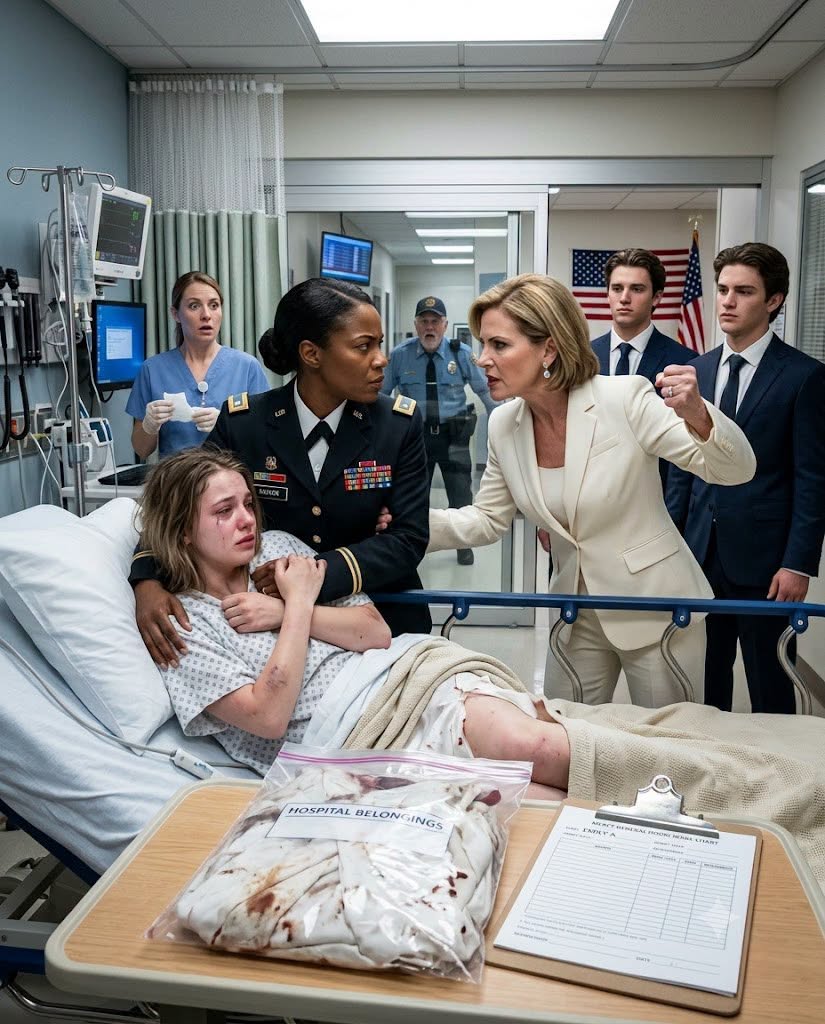
The collapse of the Prescott financial empire didn’t happen with a sudden explosion; it happened with the slow, agonizing grind of a tectonic plate shift. By the time the news cycle moved from the "scandal of the Colonel" to the "collapse of the Prescott Dynasty," the damage was already irreparable. I sat in our secured, off-the-grid location—a remote property in the Appalachian foothills that served as a relic of my Cold War-era training—watching the monitors. The stock market tickers were bleeding red. Prescott Industries, once the backbone of the state’s economy, was being dismantled piece by piece by federal investigators.
But it wasn't just the money. It was the information. The data we had recovered from Julian Vane’s cabin was a Pandora’s Box of secrets that would keep the Department of Justice busy for a decade. Every bribe, every shadow account, and every dirty deal was laid bare.
"Mom," Emily called from the kitchen, her voice sounding steadier than it had in months. She was holding a cup of tea, her movements lacking the tentative, fearful tremor that had defined her existence only weeks prior. "Look at the local channel. They’re reporting on the State Attorney General."
I walked over to the screen. The anchor, a woman whose face usually held a practiced, neutral mask, looked visibly shaken. "In a stunning development, State Attorney General Marcus Thorne has announced his immediate resignation. Rumors suggest that documents surfaced late last night linking his office to the suppression of evidence in the high-profile Prescott assault case."
I didn't smile. A victory like this wasn't a reason for celebration; it was a reason for vigilance. "It’s not just a resignation, Emily," I explained, leaning against the counter. "It’s a domino effect. When the foundation of a corrupt system is removed, the entire structure loses its grip on reality. They think they can distance themselves from the Prescotts now that the ship is sinking, but the water is rising for everyone."
Yet, beneath the surface of the news reports, the air felt thick with a different kind of tension. I began noticing the anomalies—the black sedans that seemed to rotate positions at the edge of the access road, the drone of a high-altitude surveillance craft that lingered just a second too long in the quiet mountain sky. They weren't aggressive, not yet. They were observation posts. The Prescotts were down, bleeding out financially and legally, but they were not out. They were desperate, and in my experience, desperate men are the most dangerous entities on the planet.
I moved into defensive mode, a reflex that had been hardwired into my DNA after three decades of service. I upgraded the perimeter sensors, integrated night-vision arrays into the security system, and reinforced the entry points. Every night, I did a full sweep of the property, my sidearm tucked neatly against my small of back, the cold steel a grounding reminder of my reality. I had transitioned from a mother protecting her child to a commander fortifying a bunker.
One Tuesday evening, after a particularly grueling day of analyzing new data, I found a burner phone left on our doorstep. It hadn't been there when I checked the perimeter at sunset. I brought it inside, put on rubber gloves, and turned it on. There was a single text message waiting, the screen glowing in the dark like a threat.
“You think you won? We have people inside your perimeter. This isn’t over. A Colonel belongs in the field, not hiding in the hills.”
I didn't panic. Panic was a luxury I couldn't afford. Instead, I analyzed the metadata. The signal was a relay, pinged off three different towers to obfuscate the location. They were playing games, trying to rattle me, trying to force me to commit a tactical error. They wanted me to leave the house, to draw me into an ambush where they could claim 'self-defense.'
I called in a favor from a contact at the FBI—a woman named Agent Reynolds who had spent her career hating the Prescotts as much as I did. "I need a sweep of my residence, Reynolds," I said, my voice tight. "And I need a tracker on those black sedans. They’re getting too close."
"They’re desperate, Victoria," Reynolds replied. "They don't have the courts anymore. They’re down to the street-level tactics now. Be careful. They aren't looking to win a lawsuit; they're looking to end a problem."
The realization hit me harder than any physical blow. They weren't fighting for their reputation; they were fighting for their survival. And as long as I held the evidence that would keep them in prison for life, I was the only thing standing between them and a shallow grave—or, more accurately, the only thing standing between them and the total destruction of their legacy.
May you like


I sat in the dark of the command room, watching the security feeds. Emily was sleeping, finally free from the nightmares that had plagued her. I realized then that my mission had shifted. It was no longer about legal justice; it was about the total, irrevocable erasure of a threat. I had to become the ghost that haunted them, the thing they feared more than the law.
I looked at the burner phone, then at my tactical gear. The war had changed, and it was time to change my strategy. I wasn't going to wait for them to come to me. I was going to turn the tables, and I was going to do it in a way they never saw coming.