Part 3: The Strategic Withdrawal
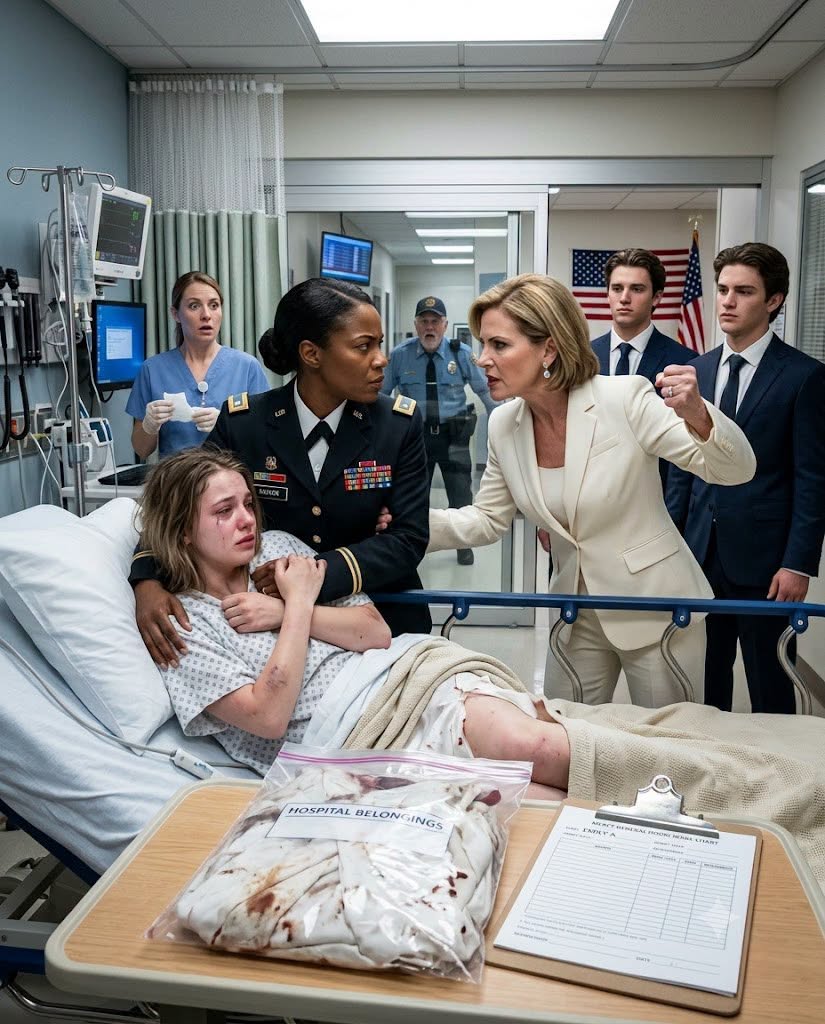
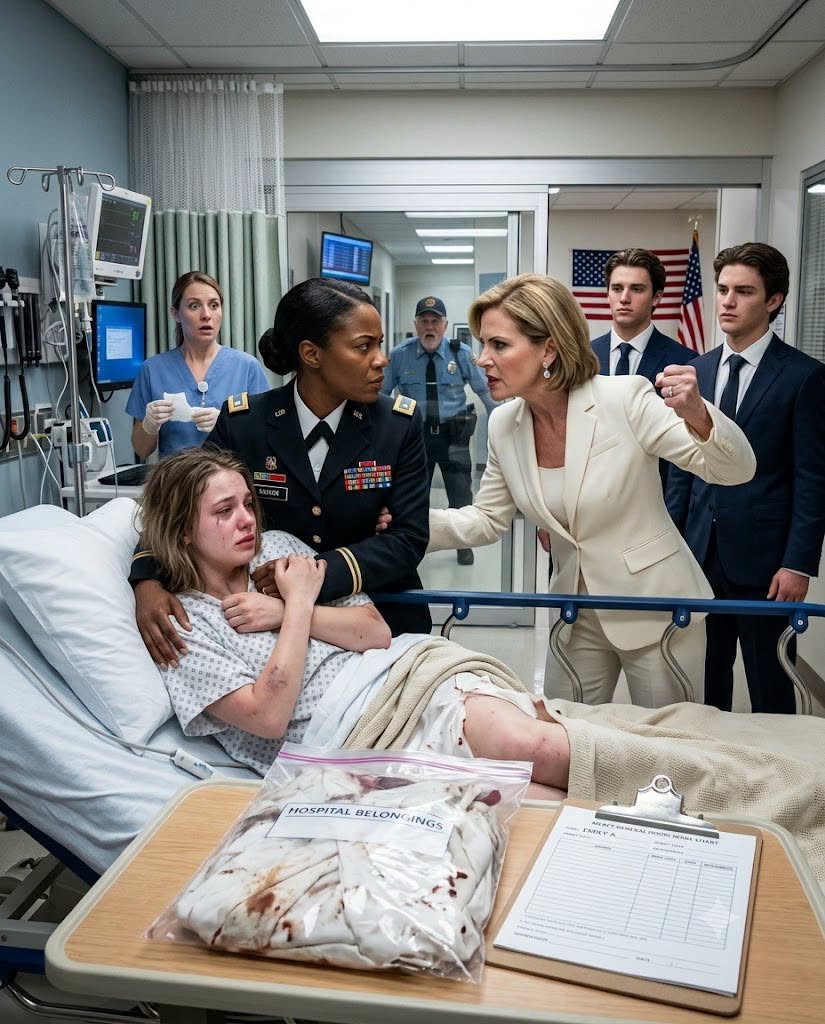
The fluorescent lights of the hospital seemed to grow brighter, or perhaps it was just that my eyes had adjusted to the heat of the conflict. Watching the officers escort Ethan and Brandon out of the observation room—their protests silenced by the presence of Judge Whitaker and the undeniable weight of the digital evidence—felt like watching a tactical withdrawal in a theater of war. The enemy had been repelled, but the war was only beginning.
Margaret Prescott did not leave with her sons. She lingered, her face a mask of calculated fury. She walked toward the door with the slow, deliberate stride of a woman who was already calculating the cost of the legal storm she intended to unleash. Before she exited, she stopped beside my chair. She didn't look at Emily. She looked at me, her eyes cold as winter flint.
"You have managed a temporary victory, Colonel," she whispered, her voice barely audible over the sterile hum of the medical equipment. "But you have opened a front you cannot possibly win. Do you have any idea how many people in this city owe their livelihoods to my husband? You have turned a domestic disagreement into a public spectacle. By tomorrow, your career will be the first thing to burn."
I didn't blink. I didn't reach for my sidearm, though the instinct to secure the perimeter was screaming in my blood. I simply sat there, a portrait of military stillness. "You speak of burning, Margaret. You clearly don't know the first thing about fire. You think your wealth is a wall, but in my line of work, we call that a target."
She sneered, turned on her heel, and walked out of the ER with a gait that suggested she was already placing calls to governors and board members.
Once she was gone, the room felt suddenly, jarringly empty. The adrenaline that had fueled my drive from Fort Liberty began to ebb, replaced by a cold, calculating resolve. I turned to my daughter. Emily was watching me, her eyes wide. The terror was fading, replaced by a burgeoning sense of awe. She had spent years being told that she was small, that she was fragile, and that her mother’s life in the military was a burden to be hidden. Today, she had seen that that very life was the shield that had saved her.
"They're going to try to ruin you, Mom," Emily said, her voice stronger than it had been an hour ago.
"Let them try," I replied, smoothing a stray lock of hair from her forehead. "They’ve spent their lives controlling people who are afraid to lose their status. They have never gone up against someone who has already lost everything in the name of duty. They are playing a game of chess; I am playing a game of attrition."
The hours that followed were a blur of bureaucratic machinery. I wasn't just a mother anymore; I was a commander managing a crisis. I coordinated with the military legal team, ensuring that every piece of evidence—the smartwatch logs, the hospital surveillance, the nurse's statements—was backed up in triplicate. I didn't trust the local precinct to handle this alone; the Prescotts were too deeply woven into the local power grid. I reached out to connections I hadn't used in a decade, calling in favors from former subordinates who were now stationed in the Pentagon and the Department of Justice.
By 2:00 a.m., the hospital had become a fortress. My legal counsel, a sharp-tongued JAG officer named Major Sarah Jenkins, arrived with a stack of paperwork that effectively stripped the Prescotts of any immediate avenue for retaliation.
"They're filing for an emergency injunction to suppress the digital evidence," Major Jenkins briefed me in the sterile waiting area. "They’re claiming the recordings were illegally obtained or doctored. They’re going to hit the media cycle within the hour, Colonel. They’ll paint Emily as an unstable socialite and you as an overreaching military official abusing her position."
"Then we move the narrative," I said, unfolding a map of the city on a plastic hospital table. "We don't defend. We attack the source. If they want to talk about stability, we’ll talk about the conditions they kept her in. If they want to talk about influence, we’ll talk about the victims they’ve silenced over the last twenty years. Major, I want you to find the cold cases. Every missing person, every 'accidental' injury involving a Prescott associate. If we are going to war, we are going to win the entire theater."
Emily was discharged at dawn. The morning light over Charlotte was gray and unforgiving. As we walked toward my SUV, a swarm of reporters gathered at the perimeter of the parking lot, their cameras flashing like distant artillery fire. The Prescotts had already begun their campaign. The news headlines were already appearing on my phone: “Army Colonel Involved in Violent ER Altercation; Questions Arise Over Professional Conduct.”
I didn't stop. I didn't give them a soundbite. I helped Emily into the passenger seat, buckled her in, and walked around to the driver's side. I looked at the reporters, these vultures waiting for a weakness, and for a fleeting moment, I wanted to tell them the truth. I wanted to tell them about the bruises on my daughter’s wrists, about the way Ethan had laughed at her pain.
But I knew better. In the military, you never give the enemy a reason to doubt your composure.
As I pulled out of the hospital, I caught a glimpse of a black sedan idling across the street. A man in a dark suit was watching us, recording our exit. The Prescotts weren't just watching; they were stalking.
"Where are we going, Mom?" Emily asked, looking out the window at the skyline.
"Not home," I said, checking my mirrors as I merged into traffic. "Home is too easy to find. We're going to a place where their influence doesn't reach. And then, we're going to start the counter-offensive."
May you like
The silence in the car was heavy, but it was no longer the silence of victims. It was the silence of soldiers preparing for the next engagement. I had spent my career protecting a country that I often didn't know the names of, but today, I was finally protecting the only thing that actually belonged to me. The Prescotts thought they had found a woman they could silence with threats of scandal and power. They had no idea that they had just woken a storm they could never hope to control.
The road ahead was long, and I knew there would be casualties, but as I glanced at my daughter, I felt a familiar, cold comfort. I was a Colonel. I was a mother. And I was absolutely, terrifyingly ready for whatever they had planned next.