Part 18: The Courthouse Reckoning
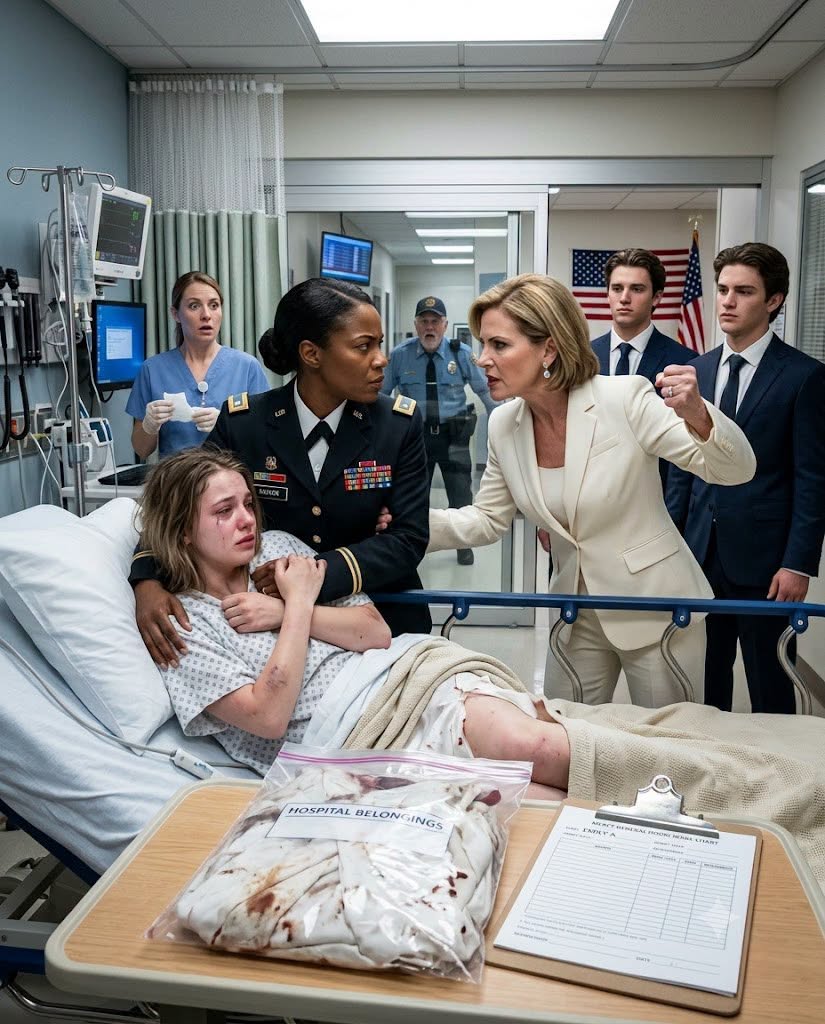
The trial of the century did not take place in a grandiose setting, but in the sterile, high-security chambers of the Federal District Court. The atmosphere was not one of celebration, but of cold, clinical finality. The courtroom was packed, a microcosm of the city that had been held hostage by the Prescott name for decades, yet for the first time, the energy in the room was not one of fear, but of anticipation for the truth.
I arrived in my full dress uniform, not out of a sense of allegiance to the institution that had betrayed me, but as a symbolic statement. The medals on my chest caught the harsh, courtroom lights—a testament to years of service, of quiet sacrifice, and of the unwavering moral compass that had brought us to this moment. I stood before the bench, and for a fleeting second, the entire gallery went silent. There was no military bearing in my posture that suggested subservience; I stood with the gravity of a woman who had seen the system at its best and its most corrupt, and who had chosen to stand for the former by destroying the latter.
When I took the stand, the weight of the moment settled over the courtroom like a shroud. The defense team for the Prescott family—a collection of the most expensive legal minds money could buy—looked haggard. Their usual tactic of delay, distraction, and character assassination had failed. They knew, as did everyone in the room, that the digital evidence I had provided was a titanium-clad cage from which there was no escape.
I didn't use flowery language. I didn't reach for emotional appeals. I gave them the facts. I walked the court through the night at Mercy General, the cold, calculating nature of Margaret Prescott’s threats, and the systemic, multi-year conspiracy involving General Halloway. I detailed the financial kickbacks, the offshore accounts used to influence local legislation, and the way the Prescott family had treated human lives as disposable assets in their portfolio.
Margaret Prescott sat at the defendant’s table, her composure finally shattered. She stared at the table, her hands locked together in a tight, white-knuckled grip. When I recounted the way her son, Ethan, had looked at Emily in that hospital room—not with remorse, but with the cold, dismissive annoyance of a man who had misplaced a possession—I saw Margaret’s shoulders tremble. The facade of the "noble dynasty" had evaporated, leaving behind a woman who looked, for the first time, like the common criminal she was.
The defense attorney tried to challenge the admissibility of the digital evidence, citing the "unauthorized nature" of the extraction. I watched him struggle, his voice lacking the conviction of a man who believed in his case.
"The evidence was obtained by a citizen exercising the right to protect her daughter from an ongoing criminal conspiracy," the presiding judge said, his voice cutting through the defense attorney’s protest like a gavel. "And given the corroborated testimony of the financial records and the internal communications of the accused, the court finds the evidence not only admissible but central to the prosecution’s case."
It was the final nail. Brandon Prescott, the older brother who had always projected an aura of untouchable, athletic confidence, sat slumped in his chair, his gaze fixed on the floor. Ethan looked around the courtroom with a panicked, shifting glare, as if he expected someone—anyone—to jump up and intervene, to restore the world to the way it had been before a mother decided that enough was enough.
May you like

I didn't feel a sense of triumph. I felt only a cold, logical satisfaction. Justice, I realized, was not a grand, dramatic flourish. It was a slow, mechanical process of removing the obstacles to truth. I stepped down from the stand, and as I walked past the defense table, I didn't look at them. I didn't need to. They were no longer the predators. They were just relics of a power structure that had already ceased to exist.
As I exited the courtroom, the reporters swarmed, their questions a cacophony of sound. “Colonel, do you have a statement?” “Colonel, what does this mean for the future of the department?” I ignored them all. I walked through the double doors of the courthouse and into the afternoon air. The sky was a brilliant, unblemished blue. I stopped for a moment, adjusted the collar of my jacket, and took a long, steadying breath. The trial would conclude, the sentences would be passed, and the names of the Prescotts would eventually fade into the footnotes of history books. But for us, the reckoning had already happened. We had stared down the darkness, and we hadn't blinked.