Part 16: The Final Link
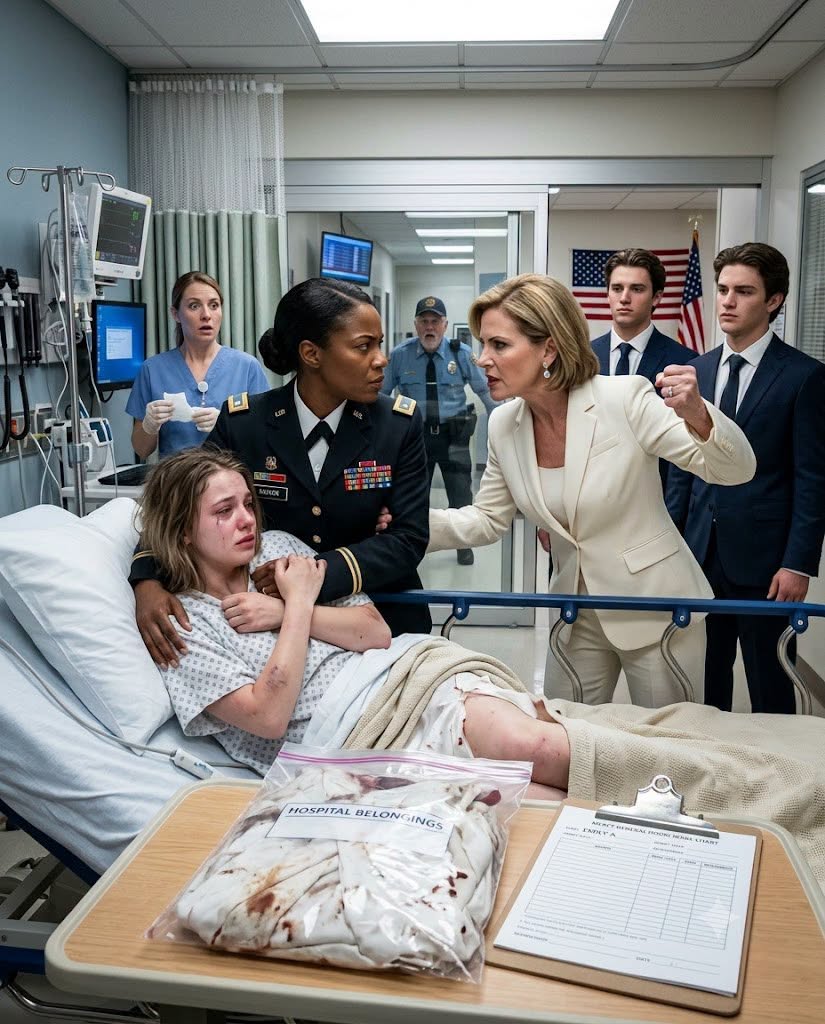
Part 16: The Final Link
The walk back to the cabin was a blur of calculated movements. I didn’t just walk through the forest; I traversed it, my eyes scanning the canopy, my ears tuned to the subtle shifts in the wind. Each step felt heavier with the gravity of what I was about to do. I had the confession. I had the digital breadcrumbs that led directly to General Halloway. Now, I needed to ensure that this evidence reached the one entity that couldn't be bought or intimidated: the Office of the Inspector General (OIG).
When I returned to the cabin, Emily was standing on the porch, a hunting knife in her hand, her posture coiled and ready. She lowered the blade the moment she recognized my gait.
"Did he talk?" she asked, her voice tight.
"He did," I said, stepping inside and heading straight for the command terminal. "And the rot goes deeper than the Prescotts. It’s Halloway. He’s the architect of the entire containment operation."
I sat at the table and pulled out the secure, military-grade hardware I’d kept hidden. I wasn't just going to send a file; I was going to broadcast it. I initiated a complex, multi-layered encryption protocol that I had designed during my time in the Pentagon’s cyber-warfare wing. It was a "dead-man’s switch" architecture. I wasn't just sending data; I was creating a signal that would reverberate through the halls of every intelligence agency in the country.
"What are you doing?" Emily asked, watching the lines of code scroll rapidly across the screen.
"I’m initiating a protocol that will force the OIG to act," I explained. "I’m uploading the Prescott financial records, the emails from Halloway’s private server, and the confession from Vane. But I’m masking the upload location through a series of ghost satellites that Halloway thinks are under his control. He’s going to spend the next hour trying to kill the transmission, and in doing so, he’s going to expose his own access points to the very people he’s trying to hide from."
It was a masterclass in psychological and technical warfare. I was using Halloway’s own surveillance network to verify the very evidence that would destroy him. For forty minutes, the cabin was silent, save for the rhythmic clicking of my keyboard. I felt the sweat prickling at my hairline, the pressure mounting as the progress bar inched toward completion.
Uploading… 45%… 60%… 85%…
Suddenly, the cabin went dark. The terminal screen flickered and died.
"They found the signal," I muttered, my heart hammering against my ribs. "They jammed the local uplink."
I didn't panic. I reached into my pack and pulled out a secondary, analog broadcast unit—a device so old-fashioned and low-tech that it hadn't been on the radar of any modern cyber-defense system. It was a burst transmitter, designed for deep-cover field operations where digital signals were compromised.
I connected it to the external antenna. "This is it, Emily. It’s a short-range burst, but it’s powerful enough to hit the satellite relays that bypass the Pentagon’s internal firewall."
I pressed the transmit key. For a heartbeat, there was nothing. Then, a low hum vibrated through the floorboards, and the small green light on the device blinked. Once. Twice. Solid.
"It’s gone," I exhaled, the tension draining out of me. "The entire archive is now sitting in the inbox of the Inspector General. It’s in the system, and it’s flagged as 'Urgent/Executive Override.' Halloway can’t touch it now."
I stood up and looked out the window at the encroaching darkness. I had spent my life believing in the institutions I served, believing that the uniform carried the weight of justice. Today, I had proven that justice wasn't something you waited for—it was something you had to seize, piece by piece, from the hands of the people who thought they owned it.
"Now we wait," I said, my voice steady. "The shockwave is going to reach the Pentagon within the hour. By sunrise, Halloway will be a man without a country."
May you like

Emily walked over and leaned her head against my shoulder. For the first time in weeks, the silence in the room wasn't the silence of fear; it was the quiet anticipation of the end of a war. I had burned the bridge behind me, but I didn't care. The path forward was clear, and for the first time in a very long time, I felt like the person I had been before the uniform, before the rank, before the politics. I was a mother who had defended her child against the most powerful forces in the country, and I had won.
The forest outside the cabin didn't feel threatening anymore. It felt like a witness. It had seen what we had done, and it would keep our secrets until the dawn broke and the world finally had to reckon with the truth we had unleashed.